
Finding a daycare that blends joyful exploration with purposeful learning can shape a child’s lifelong relationship with school. In a city as vibrant and family-friendly as Alexandria, VA, parents want a nurturing environment that sparks curiosity, builds confidence, and supports the milestones of infancy through pre-kindergarten. The best centers deliver far more than supervision—you’ll find a thoughtfully designed, play-based approach that helps children make sense of their world, one discovery at a time. From warm classrooms and inviting outdoor spaces to caring teachers and strong family communication, the right choice ensures every day feels safe, engaging, and developmentally rich. If you’re comparing options in Northern Virginia, here’s how to identify a center that balances heart, science, and community.
What Exceptional Daycare Looks Like in Alexandria: Curriculum, Care, and Community
High-quality programs in Alexandria share a common foundation: a play-based learning philosophy grounded in early childhood research. Instead of drilling facts, skilled teachers set up purposeful play—dramatic play for language and social-emotional growth, block building for early math and spatial reasoning, sensory stations to strengthen fine-motor skills and scientific thinking. This hands-on approach aligns with the Virginia Early Learning & Development Standards, which emphasize the whole child: communication, literacy, cognition, physical development, and social competence.
In practice, that means infants experience responsive caregiving and consistent routines—lots of floor time, songs, and language-rich interactions. Toddlers explore cause and effect with water tables and art materials, practice turn-taking, and begin naming feelings. Preschoolers tackle open-ended projects, compare quantities while cooking pretend recipes, and experiment with ramps and marbles to observe force and motion. Throughout, teachers observe closely and scaffold learning, introducing new vocabulary and challenges as children show readiness. When a classroom culture is warm, respectful, and predictably structured, children develop the self-regulation that later fuels academic success.
Family partnerships are another hallmark of an excellent daycare center in Alexandria, VA. Daily updates, photos, or brief notes help parents stay connected to routines, naps, and milestones. Clear health and safety practices—including secure entries, first aid/CPR-trained staff, sanitation protocols, and allergy-aware snack procedures—provide peace of mind. Outdoor play happens year-round with weather-appropriate gear, turning local parks, gardens, and nature nooks into living classrooms where children practice gross-motor skills, notice seasonal changes, and build resilience.
Just as important is community. Alexandria’s neighborhoods—Old Town, Del Ray, Carlyle, Potomac Yard, and the West End—each bring unique character. A standout center often reflects that diversity in books, music, languages, and celebrations. Children see themselves in the classroom and also learn to appreciate others. With strong teacher-child relationships and a curriculum that celebrates curiosity, an exceptional program nurtures confident, compassionate learners who love coming to school.
How to Choose a Daycare Center in Alexandria, VA: Practical Steps for Busy Families
Start with licensing and transparency. In Virginia, licensed centers adhere to state health, safety, and staffing standards. Ask to see recent inspection reports and teacher qualifications, including ongoing professional development. Review child-to-teacher ratios; lower ratios support individualized attention, especially for infants and toddlers. Then look closely at the learning environment. Are spaces clean, inviting, and organized at a child’s level? Are materials varied—blocks, books, art, science tools, dramatic play props—and rotated to sustain interest? You want a setting that balances structure and spontaneity, letting children follow their interests while teachers guide next steps.
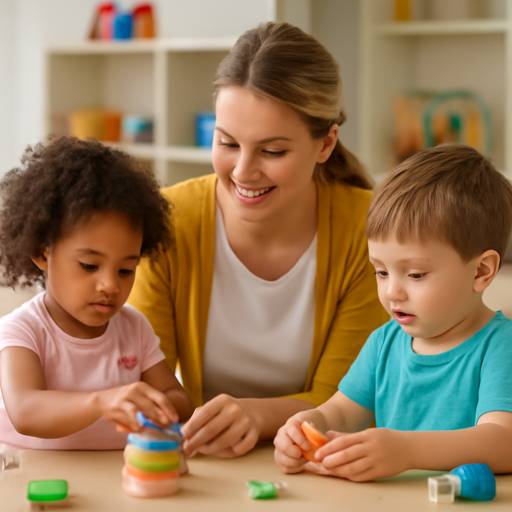
Observe interactions. Do teachers kneel to children’s eye level, narrate feelings, and extend play with rich, open-ended questions? Are transitions calm and predictable? You should see children engaged in small-group activities, free play, and outdoor time. Ask about assessment practices: great programs use observation-based tools to document growth and share progress at conferences. If your family is multilingual, inquire how the center supports home languages while building English. For pre-K readiness, look for emergent literacy woven into play—labeling in the classroom, meaningful writing centers, story retelling, and opportunities to hear and use robust vocabulary.
Logistics matter in Alexandria’s commuting landscape. Proximity to Metro stops like Braddock Road, King Street–Old Town, or Van Dorn Street can save time, as can easy access to Route 1, I-395, or the GW Parkway. Consider hours, flexible scheduling, and holiday closures in relation to your work at the Pentagon, National Landing, Fort Belvoir, or nearby offices. Transparent tuition, clear illness policies, and an established plan for nap schedules, potty training, and allergy management reduce friction for busy households. If you’re ready to research options, a convenient place to begin is a trusted local resource such as daycare center Alexandria VA, where you can explore a play-rich philosophy and family-centered care.
Finally, schedule tours. Bring a short list of questions: How is play supported and documented? What’s the approach to conflict resolution and social-emotional learning? How do teachers introduce early math, science, and literacy through projects? What communication tools are used daily? Ask to see sample lesson plans and daily schedules, and take note of how children respond to teachers. Your instinct matters: the right center feels warm, purposeful, and joyful the moment you step in the door.
Real-Life Examples: Alexandria Families Thriving With Play-Based Early Learning
Consider Maya, a Del Ray toddler who once resisted transition times. Her caregivers introduced gentle visual cues, songs, and a choice board during cleanup. Within weeks, she began anticipating routines, using words to request “one more minute,” and proudly taking a turn with the timer. Through pretend play at the market stand—sorting produce, matching colors, and counting apples—she built language and early math skills without pressure. Now, drop-offs are easier, and Maya’s growing independence shows up at home during family meals and bedtime routines.
Or think about Leo, a preschooler from Old Town fascinated by trains along the nearby tracks. Teachers leaned into his interest by setting up a ramp-and-rail STEM corner. Children tested slopes, measured distances, and sketched designs of their “stations.” They learned new vocabulary—incline, speed, distance—while practicing teamwork and problem-solving. During small-group literacy, the class created a collaborative book about their train experiments, encouraging emergent writing and storytelling. Leo’s curiosity became a springboard for the whole group’s learning, and his parents noticed him applying the same problem-solving at the playground.
Sofia’s family in the West End needed a smooth infant-to-toddler transition. Caregivers started with consistent, responsive routines—bottle feedings on demand, floor time for tummy play, and warm language modeling. As Sofia grew, teachers introduced sensory bins, sign language for key needs, and parallel play stations to support social awareness. By the time she moved to the toddler classroom, she was ready for short group activities and simple cooperative games. Her parents appreciated ongoing communication—photos, nap updates, and milestone notes—which made it easier to reinforce new skills at home.
These vignettes highlight what a strong early learning environment can do in Alexandria’s context: nurture curiosity, celebrate each child’s pace, and connect school learning with family life. Whether your child is building towers in a sunlit classroom, testing wind with pinwheels in a courtyard, or exploring seasons at a neighborhood park, purposeful play anchors their growth. When educators pair a vibrant, supportive atmosphere with research-based practice, children gain the confidence and skills they need for kindergarten—and for the wonder-filled years ahead in Alexandria, VA.

Alexandria maritime historian anchoring in Copenhagen. Jamal explores Viking camel trades (yes, there were), container-ship AI routing, and Arabic calligraphy fonts. He rows a traditional felucca on Danish canals after midnight.
