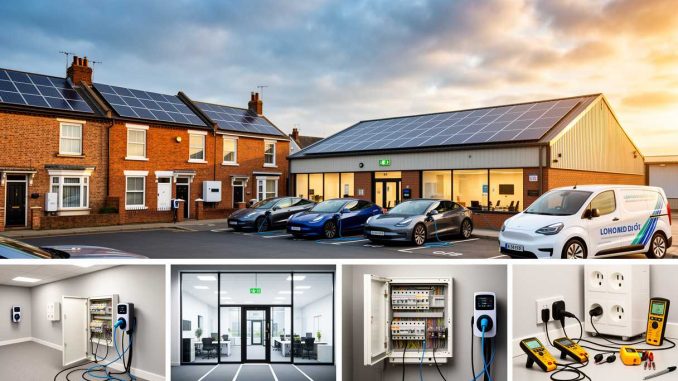
Why Bedford is an ideal location for solar power—and how it transforms your bills
Bedford’s blend of modern housing developments, character properties and thriving commercial estates makes it a prime area for adopting solar panels. The town benefits from steady southern England irradiation, which typically supports yields of around 900–1,050 kWh per kWp each year when systems are well designed and fitted on suitable roofs. In practical terms, that means a standard domestic array on a south or south-east facing roof can generate a substantial portion of a home’s annual electricity needs, especially when paired with battery storage to capture daytime energy for evening use.
Energy price volatility has sharpened the focus on generating your own power. With rooftop solar in Bedford, households can reduce daytime grid import, lower exposure to price spikes, and export surplus energy under Smart Export Guarantee tariffs. Businesses—whether in Elms Farm Industrial Estate, Woburn Road Industrial Estate, or retail spaces in the town centre—often see electricity as a significant overhead. Photovoltaics let commercial sites shift a chunk of their base load to onsite generation, strengthening competitiveness while supporting corporate sustainability goals.
Local property characteristics also favour solar. From Victorian terraces to 1930s semis and large-family homes in areas like Great Denham and Wixams, Bedford’s roofscapes typically offer workable mounting options. East–west arrays can stretch generation across the day for families out at school or work, while south-facing pitches maximise production for home workers or businesses with steady daytime demand. Many installations fall under permitted development rights in England, though listed buildings and properties in conservation areas may require additional consent. A competent installer will advise on planning nuances and ensure systems are designed to be sympathetic to roof aesthetics while meeting rigorous electrical and structural standards.
There’s also a long-term resilience factor. Pairing solar panels with a well-sized battery can reduce evening grid draw and make the most of time-of-use tariffs by storing off-peak energy overnight. For EV owners, smart charging coordinated with solar generation cuts running costs further. And thanks to the current zero VAT rating on qualifying domestic solar energy-saving materials, homeowners can often achieve stronger value for money over the system’s lifetime. All of this adds up to a compelling case for local residents and businesses who want to decarbonise, control costs and enhance property value with renewable energy.
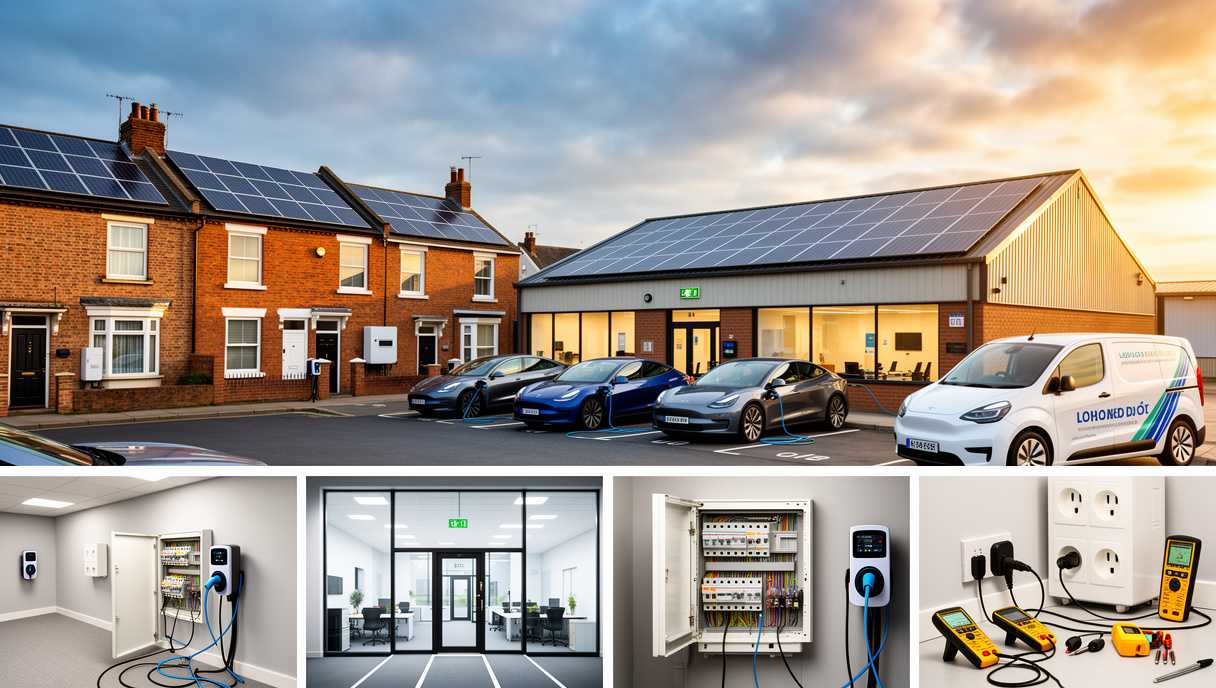
Designing a system that works for your roof, lifestyle and safety standards
Not all solar PV systems are created equal. Performance, reliability and payback depend on careful design and professional installation tailored to your property. A quality process begins with a thorough survey: measuring roof dimensions and pitch, noting tile type (slate, clay, concrete), checking rafters, and mapping shading from chimneys, dormers and nearby trees. In Bedford’s mature residential streets and mixed-use areas, shading analysis is essential to minimise underperformance at certain times of the day or year.
The panel selection stage weighs efficiency, warranty and aesthetics. Modern monocrystalline modules with half-cut cells deliver robust performance across a range of conditions, while all-black modules can blend neatly with darker tiles for a discreet look. Inverter strategy is equally important. String inverters suit uniform arrays with minimal shade, while optimised systems or microinverters can maintain output when parts of the roof are shaded or split across elevations—a common scenario for semi-detached homes or L-shaped commercial buildings.
Mounting hardware is matched to the roof covering to ensure watertightness and durability. On slate, for example, install teams use specific flashing solutions and careful slate handling to protect the roof. On pitched concrete tiles, stainless steel fixings and rail systems are set to design loads that account for local wind uplift. For flat roofs often found on Bedford’s commercial units, ballasted or mechanically fixed frames set to the right tilt angle optimise yield without compromising waterproofing. Every component—cabling, isolation points, earthing, surge protection—should meet current BS 7671 requirements and relevant product standards to safeguard your property and ensure long-term reliability.
Integration with battery storage and smart controls supercharges savings. A correctly sized battery increases self-consumption and opens options like charging from cheap overnight tariffs to cover early morning use. If you own an EV, coordinating car charging with midday sun can materially reduce transport costs. Smart monitoring apps let you track generation, consumption and export in real time, helping households and facilities teams refine usage patterns. On the compliance side, grid notifications (G98/G99), documentation, labelling and commissioning tests ensure your installation is safe, insurable and grid-approved. Aftercare matters too: periodic visual checks, performance reviews and prompt fault finding keep your investment on track for decades of dependable service.
When done right, a PV system becomes more than panels on a roof. It’s a whole-house or whole-site energy strategy—combining solar generation, storage, electrified heating where relevant, and smart appliances—to reduce waste and provide a smoother, cleaner supply of power. For Bedford homeowners upgrading consumer units or planning LED lighting improvements, scheduling these works alongside solar can streamline project timelines and optimise energy outcomes across the board.
Real-world scenarios in Bedford: homes, schools and businesses making solar pay
Consider a typical Bedford semi with a 3.6 kWp array across two elevations and a 5 kWh battery. Weekday production covers daytime base loads—fridges, home office devices, and background appliances—while surplus charges the battery for evening cooking, entertainment and lighting. In summer, hot water can be partially heated via an immersion diverter, cutting gas use. Across the year, households like this often see their grid imports drop significantly, especially when they fine-tune appliance use to sunnier periods. Add an EV with smart scheduling and they can substantially reduce fuel spend, drawing on solar at midday and cheaper off-peak top-ups overnight.
For a small business in Elms Farm Industrial Estate—say a workshop with machinery, compressors and office space—a 30 kWp system on a south-facing flat roof can offset a large share of daytime consumption. This stabilises operational costs and supports sustainability commitments. When production outstrips use over weekends, surplus exports earn credits through the Smart Export Guarantee. With rising expectations from clients and supply chains around carbon reduction, visible rooftop solar panels demonstrate leadership while delivering practical bottom-line benefits.
Bedford’s education sector also stands to gain. Schools and academies typically operate during daylight hours, aligning well with solar generation. An east–west arrangement can extend morning and afternoon production to match lessons, hall usage and ICT suites. Coupled with LED lighting and smart controls, PV helps schools meet budget constraints while teaching pupils about climate action in a tangible way. The system’s monitoring portal becomes an educational tool, turning kilowatt-hours and CO2 savings into real-world maths and science lessons.
Local building stock brings its own opportunities and considerations. Victorian terraces near the town centre may require sensitive design to respect street character; in conservation areas or on listed properties, planning guidance and specialist fixings may apply. New-build homes across developments like Wixams and Great Denham often have modern trussed roofs well-suited to clean, symmetrical arrays. In all cases, a property-specific plan ensures safe mounting, appropriate cable routes, and a tidy finish that complements the architecture.
Financially, the case for solar goes beyond a single headline number. Return on investment depends on your tariff, daytime usage pattern, array orientation, shading profile and whether you integrate storage. Households with regular daytime occupancy, EVs or electrically heated hot water often unlock faster paybacks. Businesses with steady base loads—IT equipment, refrigeration, ventilation—typically utilise a high percentage of onsite generation. The current zero VAT for qualifying domestic installations improves the numbers further, and export payments help monetise sunny spells when usage dips. With Solar Panels in Bedford, the right design balances all these factors, aligning system size and technology choices with your real-world energy behaviour.
Looking ahead, many Bedford residents are pairing solar PV with future-ready upgrades. Consumer unit improvements support additional circuits for EV chargers and heat pumps. Battery-ready inverters ease later storage integration if you want to start with panels only. Smart metering, dynamic tariffs and automation platforms continue to evolve, opening opportunities to shift loads (like washing machines or dishwashers) into sunny windows. And as panels, inverters and batteries carry long manufacturer warranties, a well-specified system offers reliable, low-maintenance service well beyond the initial payback period—helping homes, schools and businesses across Bedford generate clean power on their own terms.

Alexandria maritime historian anchoring in Copenhagen. Jamal explores Viking camel trades (yes, there were), container-ship AI routing, and Arabic calligraphy fonts. He rows a traditional felucca on Danish canals after midnight.

Leave a Reply